
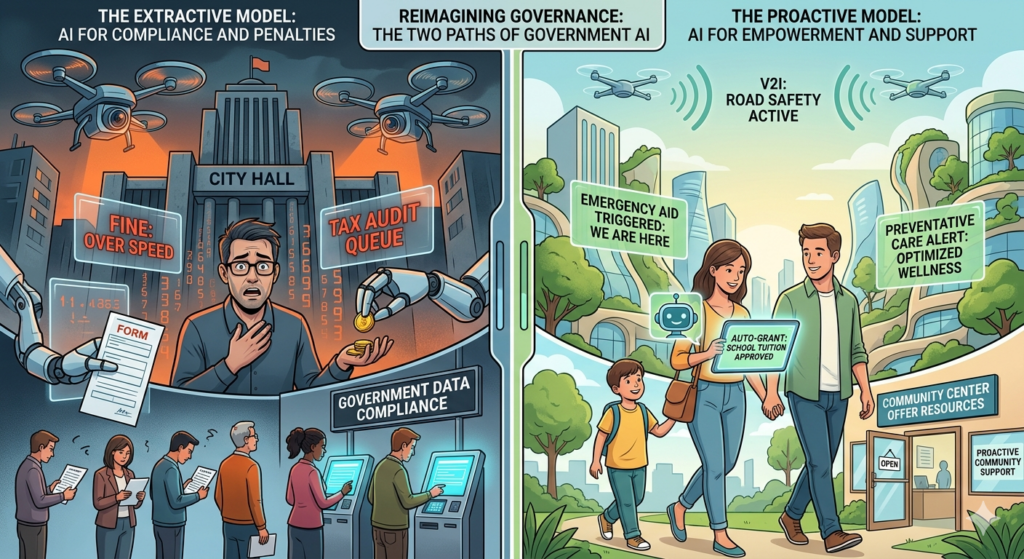
The transition from “manual” to “digital” shouldn’t just mean filling out forms on a screen instead of paper. It should mean the end of administrative busywork for the average citizen. As society moves toward a fully digitized economy, the traditional burden of compliance—calculating taxes, paying fines, and navigating bureaucracy—should shift from the individual to the institutions and systems that handle the flow of money and data.
The goal is simple: A system that serves the people by staying out of their way.
1. From Individual Tax to “Institutional Flow”
In a world of digital banking, every transaction is already tracked. Requiring an individual to manually report their income or expenses is a redundant, 20th-century practice.
- The Shift: Instead of taxing the worker, the tax burden could shift to the point of accumulation or high-level service. If a parent pays for a premium education, the school—as a high-revenue institution—handles the fiscal contribution.
- The Benefit: This liberates the individual’s income to be used immediately for family growth, such as better schooling or healthcare. People keep 100% of their “seed money” to invest in their children’s future, while the institutions that profit from those services manage the societal contribution.
2. The “Safety-First” Infrastructure (Zero-Fine Policy)
Traffic fines are often viewed as “revenue collectors” disguised as safety measures. In a truly advanced society, AI should be used to prevent the mistake, not profit from it.
- The Old Way: A driver accidentally enters a bus lane or exceeds a limit and receives a bill in the mail weeks later.
- The Evolution: Using vehicle-to-infrastructure (V2I) communication, the road itself “talks” to the car. If a driver is about to make an illegal turn or speed, the car provides a gentle vibration or a visual alert on the windshield.
- The Result: The violation never happens. The goal shifts from punishment to prevention, sparing the public from unexpected financial hits and keeping the focus on collective safety.
3. Automated Crisis Intervention: “The Safety Net That Finds You”
Currently, when a person is in crisis—whether it’s a medical emergency or a sudden financial loss—the burden is on them to find help. But a digital government already “knows” when something is wrong.
- Proactive Support: If a person’s digital records show a sudden cessation of income or a hospitalization, the system shouldn’t wait for a 15-page application for aid.
- The Response: AI could automatically trigger a “Bridge Grant,” pause mortgage or rent payments, and have a local support worker call the individual to ask, “How can we help?” rather than the individual spending hours on hold with a government department.
4. Reimagining Everyday Systems
| Current System | The Burden | The “People-First” Future |
| Education Fees | Parents struggle with fees + tax; schools operate as businesses. | Individuals pay for schooling with “Gross Income.” Schools handle all tax duties, ensuring the student’s needs are prioritized first. |
| Public Utilities | Complex billing and “late fees” for basic human needs. | AI optimizes energy usage in real-time. If a household is struggling, the system automatically switches them to a “basic tier” for free to ensure no child sits in the dark. |
| Licensing | Renewing IDs, permits, and registrations every few years. | “Lifetime Identity.” AI verifies your status through secure biometrics. You never “renew” a license; it is simply a part of your digital existence. |
The Result: A Society of Growth, Not Compliance
By shifting the “paperwork” of life to the institutions (banks, large corporations, and schools) and using AI to prevent errors rather than punish them, we create a low-friction society.
When people aren’t “kept busy” by the stress of fines, audits, and bureaucracy, they have the mental and financial bandwidth to be better parents, more creative workers, and more engaged community members. The technology exists to make the government a silent, supportive partner—allowing the public to focus on what actually matters: living well.